Haint Blue
Practice is the ritual. Performance is the pact. Most players never see where the pact breaks.
IThe Reality
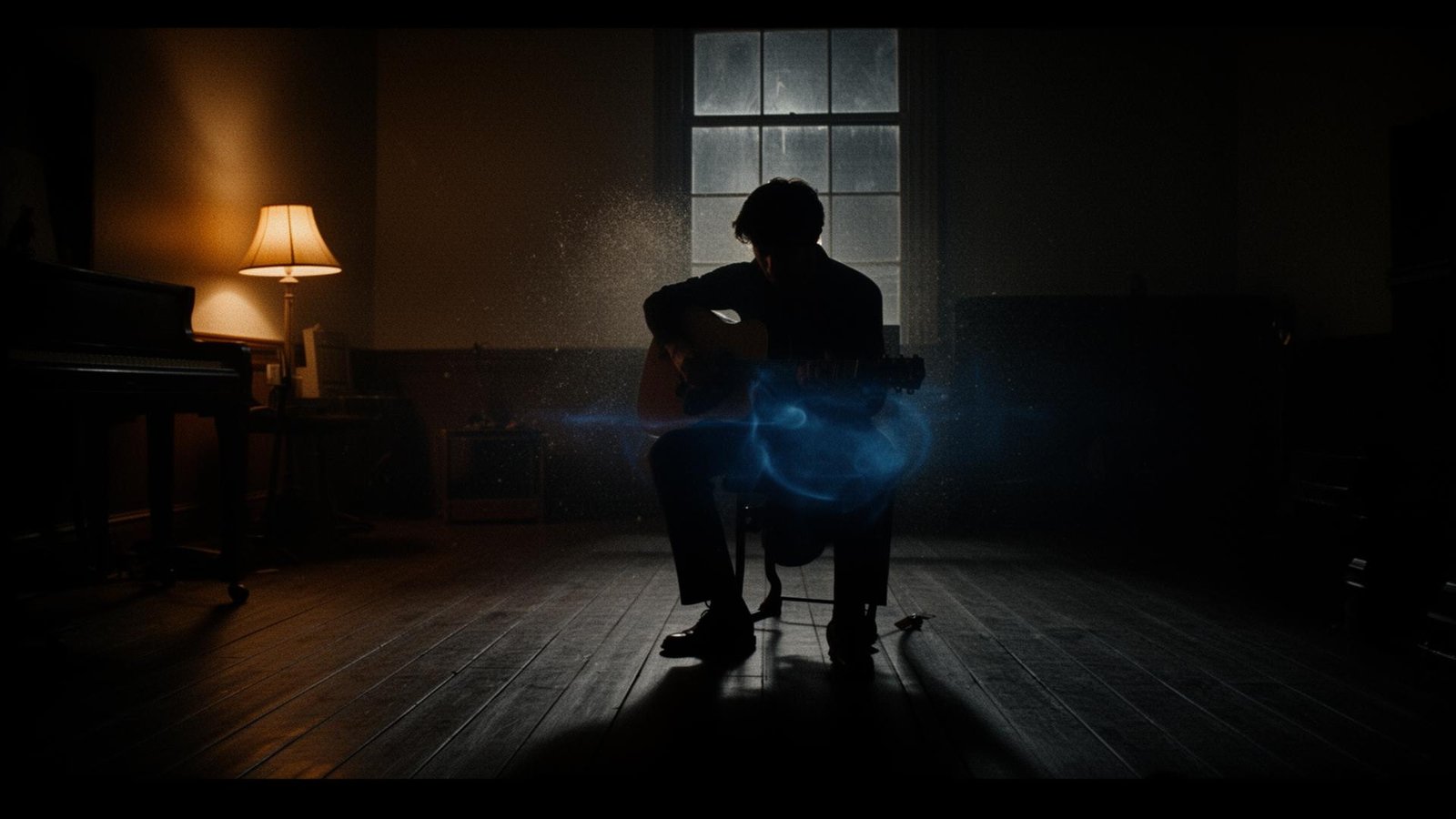
The miss is usually late evidence.
By the time the room hears it, the pact has already started to break.
The body shows it first: a guard, a lean, a held breath, a longer path to the note. Haint Blue is built for that pre-miss interval, where the useful evidence is still quiet.
IIBefore the Miss
What the body says first.
The system looks for reviewable movement patterns, not moral failures. These are the kinds of signals that can matter before the listener hears the break.

- 01
Guarding
A thumb clamps. A wrist closes. The body protects the phrase before the sound admits anything is wrong.
- 02
Timing Lean
The hand arrives a little early, the attack gets impatient, and the take starts bargaining with the beat.
- 03
Path Drift
The same passage starts taking a longer route. The movement is still playable, but the pact has loosened.
- 04
Strain Rise
Pressure gathers in the wrist, hand, or shoulder. The player feels it before the listener can name it.
IIIThe Doctrine
The method is restraint.
Haint Blue should feel like the room was protected. The technology matters only if the ritual survives it.
- I
Capture without interrupting.
The take is left intact. Haint Blue does not break the room to measure it.
- II
No live correction.
Nothing buzzes, scores, scolds, or turns the phrase into a command prompt.
- III
No gamified practice.
No streaks. No badges. No leaderboard dressed up as musicianship.
- IV
The room stays a room.
Wood, breath, instrument, repetition. The system waits until the player is ready to look.
- V
Review happens after.
The evidence returns as a short artifact, not an interruption inside the ritual.
IVThe Review Artifact
What the player gets back.
Not a dashboard. Not a grade. A private after-session artifact: the player's own take, the corrected ghost hand, and the small interval where the body started leaving the phrase.
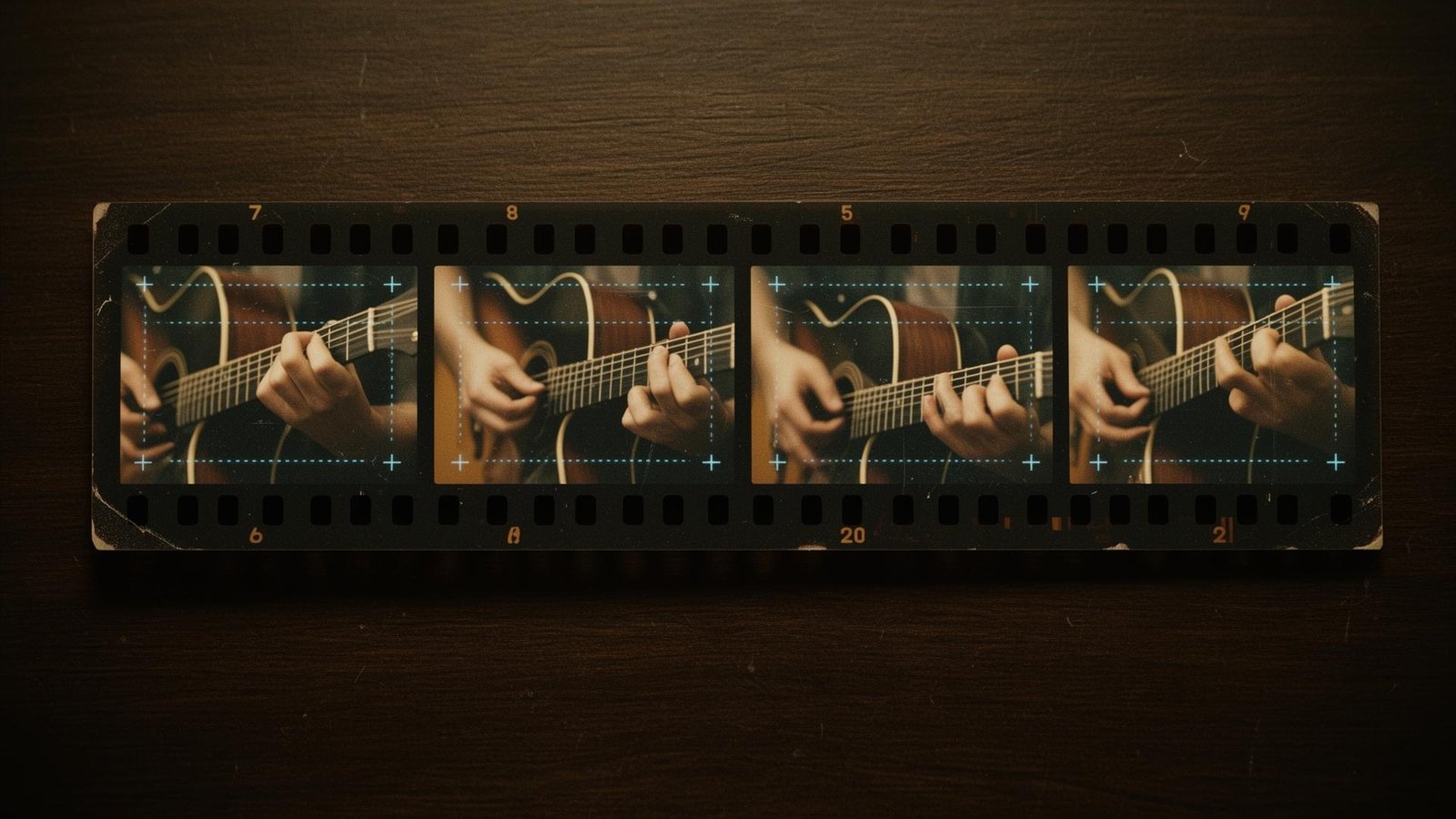

- -00:00.42Reference hand appearsmodel
- -00:00.28Observed hand starts driftingtake
- -00:00.18Efficient path holds shapeghost
- -00:00.06Gap becomes reviewablewindow
- 00:00.00The room hears the missresult
The original take
The recording remains the evidence. Haint Blue marks the passage without replacing the performance with a score.
The pre-miss window
The review narrows attention to the seconds before the audible break, where the body usually shows the change first.
The ghost hand
A corrected reference position sits over the player hand as a comparison layer, slightly offset when the efficient path differs.
The practice question
The artifact returns one useful question: what changed before the phrase changed?
VThe System Beneath
A glimpse beneath the floorboards.
Haint Blue is the musical embodiment of Haint Engine, a patent-pending observability system.
The engine treats the instrument as part of the body-state problem. Haint Blue keeps that technical core out of the player's way and returns only what helps the take become reviewable.
- 01
Capture
Video, audio, and instrument-relative motion are preserved without turning the session into a live correction loop.
- 02
Frame
The instrument is treated as part of the movement problem: neck, bow, key plane, fretboard, mouthpiece, stick, or tool path.
- 03
Infer
Haint Engine estimates what the camera cannot fully see: guarded joints, hidden drift, contact timing, and likely pre-miss state.
- 04
Return
Haint Blue turns the technical readout into a private review artifact a musician or teacher can actually use.
VIThe Proof
Show the pact breaking.
The proof is the review frame: one passage, one visible take, one system view, and the corrected hand path appearing before the listener hears the miss.
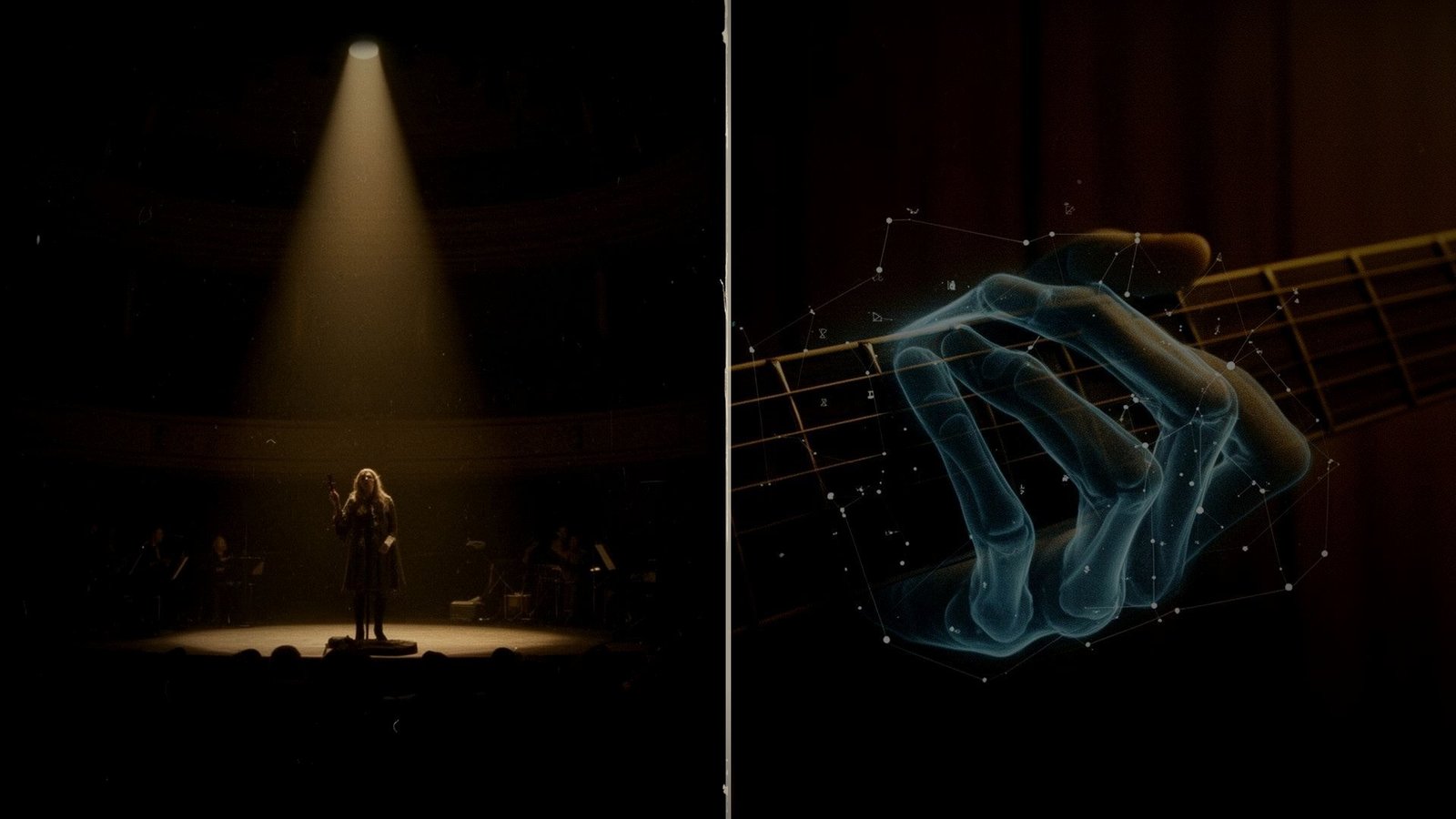 What the listener hearsWhat the system seesProof Framepre-miss review / private artifact
VIIAccess
Bring a real passage.
Early access is for players, teachers, and collaborators with a specific musical problem: a phrase that tightens, drifts, or breaks before the sound gives it away.
Send the instrument, the passage, what keeps changing before the miss, and whether there is already a recording that shows the problem honestly. Specific is useful. Polished is not required.
access@haintengine.comA passage, phrase, or technique problem that breaks in a repeatable but hard-to-explain way.
A student pattern you can see in the room but cannot easily preserve after the lesson is over.
Research, engineering, visual, or music-domain help that can protect the feel of the work.
Instrument, passage, recurring issue, and any existing recording that shows the problem honestly.
- Instrument
What are you playing, teaching, or studying?
- Passage
Where does the break keep showing up?
- Pattern
What changes before the miss arrives?
- Footage
Do you already have a take worth reviewing?
VIIIThe Pact
The name is not decoration.
In Southern folklore, a haint is something you cannot quite see, but you know it is there. Haint Blue uses the myth for the thing already inside the room: the hidden pressure in the body, the small betrayal in the hands, the moment practice becomes evidence.
Across parts of the South, porch ceilings were painted haint blue to confuse or ward off restless spirits, turning a threshold into protection.
Haint Blue borrows that idea carefully: a quiet blue field at the edge of the room, keeping what haunts the performance visible without letting it take over the ritual.